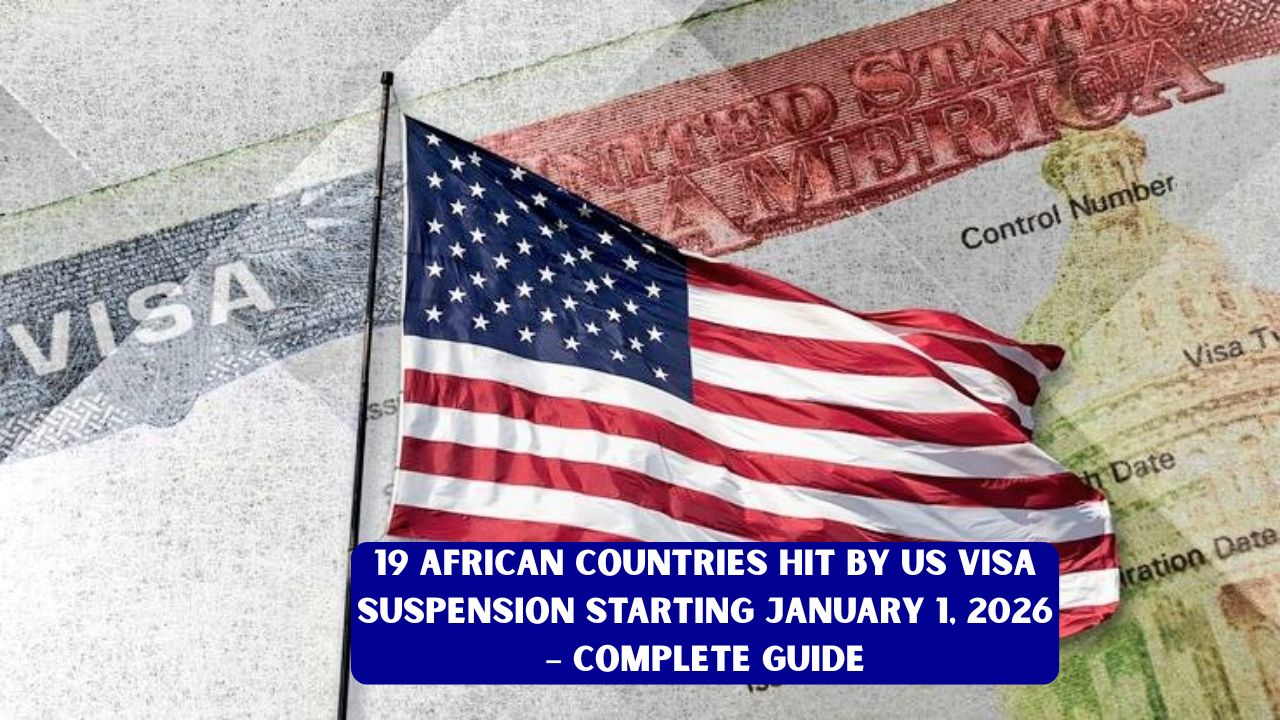
Starting January 1, 2026, the United States government will implement a significant shift in its immigration policy, affecting several nations across the globe. Under Presidential Proclamation 10998, a total of 19 countries—the majority of which are in Africa—will face a partial suspension of visa issuance. This directive, titled “Restricting and Limiting the Entry of Foreign Nationals to Protect the Security of the United States,” aims to tighten border controls and enhance national security protocols. For travelers, students, and families from the affected regions, understanding these changes is vital for navigating future travel plans.
Overview of the New Visa Suspension Policy
The policy serves as an expansion of previous travel restrictions, focusing on countries where the U.S. government has identified deficiencies in identity management and information-sharing practices. The suspension primarily targets nonimmigrant categories that facilitate temporary entry, such as tourism and education, as well as nearly all immigrant visa categories. Officials have noted that the measure is intended to encourage foreign governments to improve their vetting processes and cooperate more closely with U.S. law enforcement to verify the backgrounds of their citizens.
Comprehensive List of Affected Countries
While the proclamation impacts 19 countries globally, the African continent is disproportionately represented in this update. This highlights a strategic focus on regional security and the integrity of travel documents. Below is a detailed look at the nations subject to the partial suspension starting in early 2026:
| Continent | Affected Countries |
| Africa | Angola, Benin, Burundi, Côte d’Ivoire, Gabon, The Gambia, Malawi, Mauritania, Nigeria, Senegal, Tanzania, Togo, Zambia, Zimbabwe |
| Americas/Caribbean | Antigua and Barbuda, Cuba, Dominica, Venezuela |
| Oceania | Tonga |
Impacted Visa Categories and Restrictions
The suspension is specifically tailored to certain visa types, meaning not every traveler is completely barred, though the hurdles for entry have increased significantly. The following categories are the most heavily impacted:
-
Visitor Visas (B-1/B-2): These are for individuals traveling for business, pleasure, or medical treatment.
-
Student Visas (F and M): This affects academic and vocational students planning to enroll in U.S. institutions.
-
Exchange Visitor Visas (J): This includes participants in work-and-study-based exchange programs.
-
Immigrant Visas: Nearly all paths to permanent residency (Green Cards) are suspended, with very few exceptions.
Key Exemptions and Special Cases
Despite the broad nature of the proclamation, the U.S. State Department has outlined specific groups that remain exempt from these restrictions. Lawful Permanent Residents (Green Card holders) are not affected, nor are individuals who already possess a valid visa issued before the January 1 deadline. Furthermore, dual nationals who apply using a passport from a non-restricted country may still be eligible. Other exceptions include Special Immigrant Visas for U.S. government employees and participants in major international sporting events, ensuring that specific diplomatic and professional commitments remain intact.
The Strategic Reasoning Behind the Decision
The White House has cited several reasons for this move, ranging from national security concerns to high rates of visa overstays. In the case of Nigeria, the most populous nation on the list, officials pointed to challenges in verifying criminal records and the presence of radical groups in the region. By implementing these restrictions, the U.S. aims to pressure these nations into adopting more robust electronic passport systems and more transparent data-sharing agreements regarding public safety and terrorism.

What This Means for Current Visa Holders
If you are a citizen of one of the 19 countries and currently hold a valid U.S. visa, you do not need to worry about immediate revocation. The proclamation explicitly states that visas issued before the effective date will remain valid until their expiration. However, travelers from these nations should prepare for more rigorous screening at ports of entry. For those currently inside the United States, the policy does not terminate their legal status, but it may complicate their ability to renew visas if they choose to leave and re-enter the country after the start of the new year.
Navigating the Future of US-Africa Travel
The introduction of these restrictions marks a complex chapter in international relations. While the U.S. maintains that these steps are necessary for domestic safety, the impact on education, business, and family reunification is expected to be profound. Prospective travelers are encouraged to stay updated through official embassy channels and consult with legal experts if they have ongoing immigration cases. As the January 1, 2026, deadline approaches, the global community will be watching closely to see how these 19 nations respond to the new requirements.
FAQs
Q1 Will my current visa be canceled on January 1?
No, the proclamation does not revoke existing valid visas. If your visa was issued before January 1, 2026, it remains valid for travel until its original expiration date.
Q2 Can I still apply for a visa interview?
Yes, applicants can still schedule interviews. However, unless you fall under a specific exemption, you will likely be found ineligible for the visa issuance under the current proclamation terms.
Q3 Are there exceptions for family emergencies or medical needs?
The proclamation is quite strict, but discretionary waivers may be available in extremely rare circumstances where entry is deemed in the national interest or to prevent undue hardship.
Disclaimer: The content is intended for informational purposes only. You can check the official sources; our aim is to provide accurate information to all users.