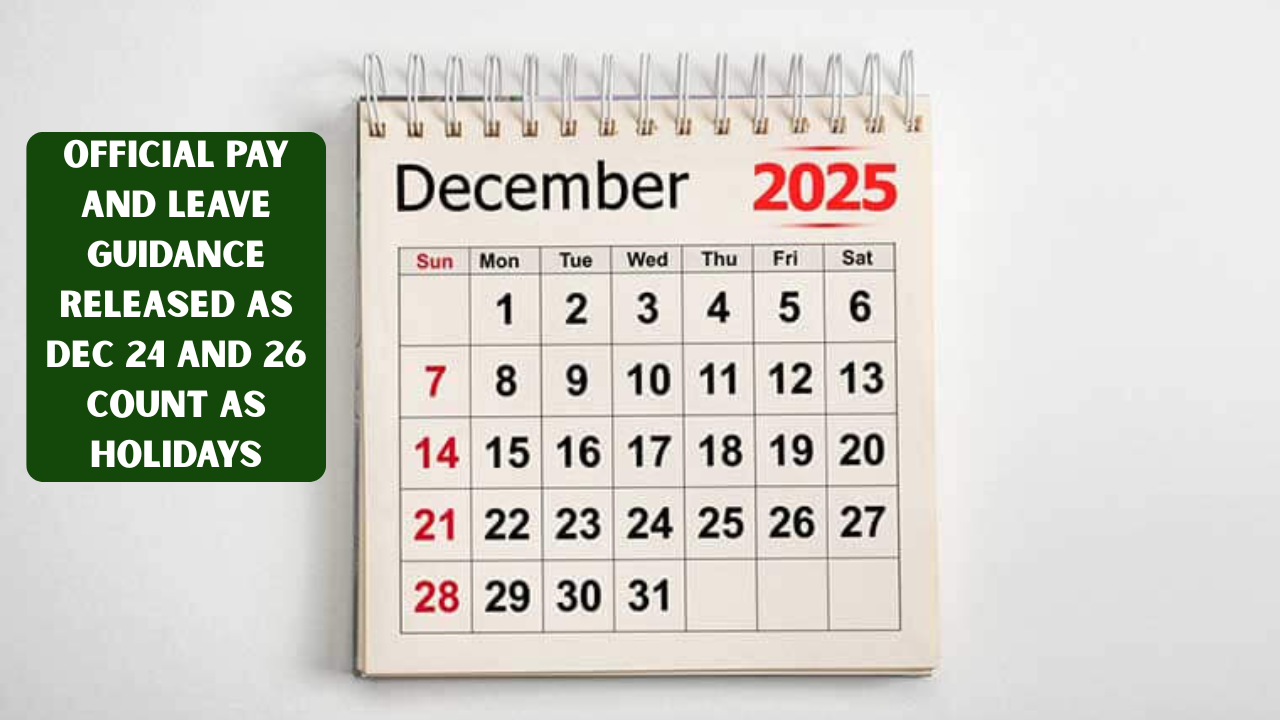
The landscape of the 2025 festive season has shifted significantly for the federal workforce following a decisive executive action. President Donald Trump has officially signed an Executive Order declaring both Wednesday, December 24 (Christmas Eve), and Friday, December 26, as full holidays for executive branch employees. With Christmas Day already established as a statutory holiday on Thursday, this move effectively bridges the gap, creating an unprecedented five-day holiday break. For federal workers, this provides a rare opportunity for extended rest, but it also necessitates a clear understanding of the specific pay and leave guidance issued by the Office of Personnel Management (OPM).
Understanding the Executive Order for 2025
The directive issued on December 18, 2025, mandates the closure of executive departments and agencies, excusing employees from duty on the day before and the day following Christmas. While this gesture is a welcome relief for many, it is crucial to recognize that these are temporary designations for the current calendar year rather than permanent additions to the federal holiday schedule. Permanent holidays require Congressional legislation; therefore, this specific “five-day weekend” is a unique occurrence for 2025. Agency heads still maintain the discretion to require certain essential personnel—particularly those in national security, defense, or public safety roles—to report for duty despite the general closure.
Impact on Scheduled Leave and Time Off
One of the most immediate questions for employees involves previously approved leave. According to the OPM guidance, any employee who had already scheduled annual leave, compensatory time, or credit hours for December 24 or December 26 will not be charged for that leave. Essentially, the holiday status “overwrites” the leave request, allowing employees to preserve their hard-earned hours for future use. However, there is a critical caveat regarding “use or lose” leave. If an employee is unable to reschedule forfeited leave before the end of the leave year (January 10, 2026, for most), that time will be lost, as the law does not permit restoration under these specific holiday conditions.
Pay and Premium Benefits for Working Personnel
For those required to work during these newly designated holidays, the financial benefits are structured according to standard federal holiday rules. Employees who perform non-overtime work on December 24 or 26 are entitled to holiday premium pay. This typically means they receive their basic pay plus a “holiday premium” equal to their rate of basic pay for the hours worked. It is important to note that this premium pay does not apply to all categories; for instance, certain firefighters and employees receiving annual premium pay for standby duty may follow different pay provisions and might still be charged leave if they do not report.
| Date | Holiday Status | Pay/Leave Treatment |
| Dec 24 (Wed) | Executive Order Holiday | Excused from duty; Premium pay if worked |
| Dec 25 (Thu) | Statutory Federal Holiday | Closed for all federal employees; Premium pay if worked |
| Dec 26 (Fri) | Executive Order Holiday | Excused from duty; Premium pay if worked |
| Dec 27-28 | Weekend | Standard weekend rules apply |
Guidelines for Part-Time and Intermittent Staff
The rules for part-time and intermittent workers are slightly more rigid. Part-time employees are entitled to holiday pay only if they have a regularly scheduled tour of duty on the actual calendar day of the holiday. If December 24 or 26 is not a part of their standard workweek, they do not receive an “in-lieu-of” holiday. Intermittent employees, who do not have a regular schedule, generally do not receive pay for holidays on which they do not work, though they are paid their basic rate for any actual hours performed on those days.
Determining “In-Lieu-Of” Holidays
For full-time employees whose regular day off falls on Wednesday, Thursday, or Friday, the “in-lieu-of” holiday rules apply. These rules ensure that all full-time staff receive the same number of holidays regardless of their specific shift patterns. For example, if an employee’s workweek is Sunday through Thursday, Friday (Dec 26) is a non-workday. In this scenario, the employee would typically observe their “in-lieu-of” holiday on the preceding workday. This ensures that the benefit of the executive order is distributed fairly across the workforce, though the exact date of the “in-lieu-of” day depends on the specific “deemed Sunday” of the employee’s schedule.
Scope and Private Sector Implications
It is vital to clarify the scope of this guidance: it applies almost exclusively to the federal executive branch. While the U.S. Postal Service and contract workers are often influenced by such orders, they are encouraged to verify specific entitlements with their supervisors or contracting officers. Furthermore, the private sector is under no legal obligation to follow the federal government’s lead. While some private companies may choose to grant extra time off to remain competitive or boost morale, most banks, retail stores, and private businesses will remain open on December 24 and 26, adhering to their own corporate holiday policies.
Final Preparations for the Holiday Break
As the government prepares for this extended closure, employees should double-check their timecards and verify their status with HR departments. The implementation of this order is overseen by the Director of the OPM to ensure consistency across various agencies. By understanding these pay and leave regulations now, federal workers can maximize their holiday break without the stress of administrative confusion. This 2025 holiday season stands as a significant moment of recognition for the federal workforce, offering a rare five-day window for celebration and reflection.

FAQs
Q1. Do private sector employees get these days off too?
No. The Executive Order only applies to federal executive branch employees. Private companies determine their own holiday schedules and are not required to close on Dec 24 or 26.
Q2. What happens if I already took leave for those days?
You will not be charged for the leave. Your agency will automatically convert those days to “holiday” status, and the leave hours will be returned to your balance, provided they are not “use or lose” hours expiring soon.
Q3. Will the Post Office and banks be closed?
Generally, no. While federal offices are closed, the U.S. Postal Service and most banks typically remain open on Christmas Eve and the day after Christmas, though they may have modified hours.
Disclaimer
The content is intended for informational purposes only. you can check the officially sources our aim is to provide accurate information to all users