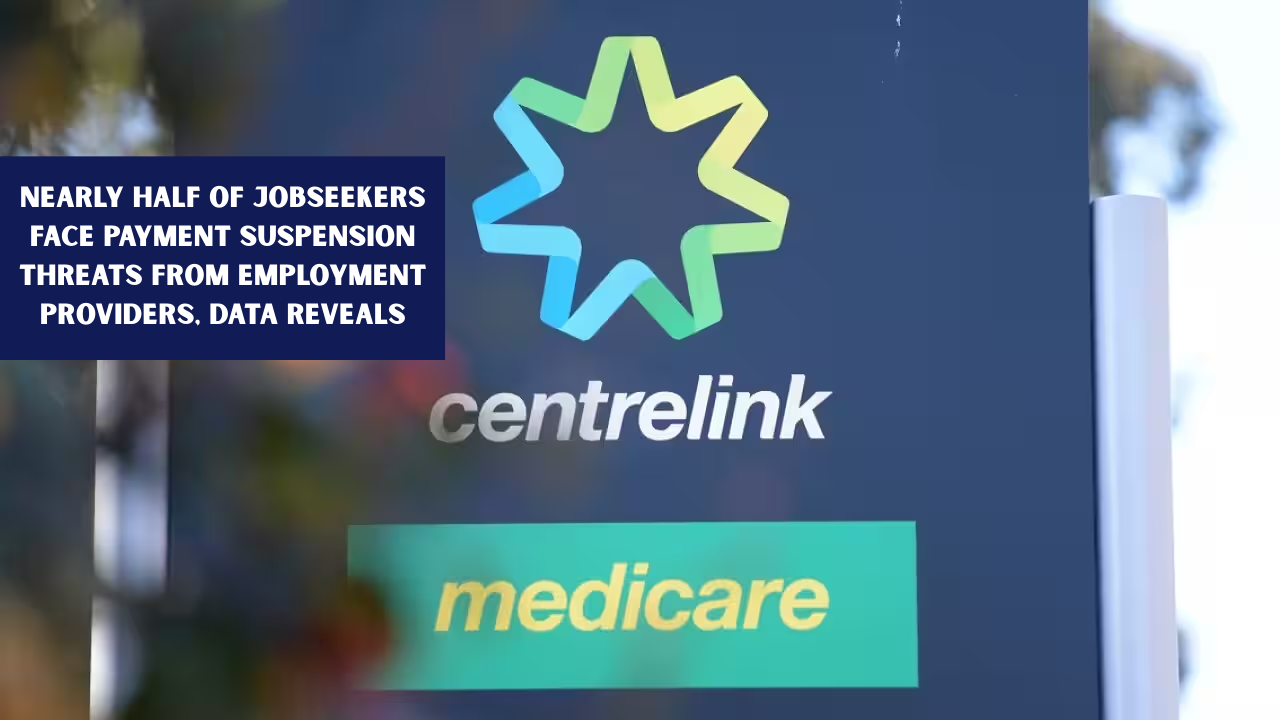
A startling new analysis of government data has revealed a significant crisis within Australia’s welfare system, with nearly half of all jobseekers reporting threats of payment suspensions from their employment service providers. According to data collated by advocacy groups and the Department of Employment and Workplace Relations (DEWR), the frequency of these automated “compliance actions” has reached unprecedented levels in late 2025. This trend has sparked intense debate among policymakers and social advocates regarding the mental health impact and the underlying legality of a system that appears to prioritize administrative punishment over genuine employment support.
The Scale of Payment Suspensions in 2025
Recent figures released in December 2025 highlight a worrying surge in the use of the Targeted Compliance Framework (TCF). In the quarter ending September 30, 2025, approximately 618,000 payment suspension notices were issued by Workforce Australia providers.4 This represents a 23% increase from the previous quarter, where 504,000 notices were sent. Advocacy groups, including the Antipoverty Centre, suggest that the system is issuing these threats at a rate of roughly five per minute. While many suspensions are lifted before a financial penalty occurs, the constant threat of losing one’s primary source of income is creating a climate of fear for hundreds of thousands of Australians.
Vulnerable Groups Most At Risk
The data further reveals that the burden of these suspensions is not distributed equally. Vulnerable populations, specifically those with disabilities and First Nations jobseekers, are disproportionately targeted by the automated compliance system. This has led to accusations of systemic bias within the mutual obligation framework. Below is a breakdown of the demographics most affected by payment suspensions in the 2024–2025 period:
| Demographic Group | Share of Total Suspensions | Key Challenge Identified |
| People with Disability | 33% | Difficulty meeting rigid physical activity requirements |
| First Nations People | 26% | Barriers to digital reporting in remote communities |
| Long-term Unemployed | 41% | Mental health toll from repeated compliance threats |
| Youth Allowance (Other) | 18% | Lack of experience navigating provider bureaucracy |
The “Bullying” Allegations Against Providers
Social advocates argue that employment providers frequently use the threat of suspension as a “bullying” tactic to ensure compliance with administrative tasks. These tasks often include attending unnecessary meetings or handing over payslips from independent work—actions that can trigger public funding payments for the providers themselves. Kristin O’Connell, a spokesperson for the Antipoverty Centre, noted that the system’s high numbers make it easy to lose sight of the individual human impact. Jobseekers report feeling pressured into “make-work” activities purely to avoid the automated notification that their funds have been blocked.
Recent Legal Pauses and Government Intervention
In light of these staggering numbers and growing concerns over the legality of automated cancellations, the Australian Government has taken several emergency steps. Throughout 2025, the Secretary of DEWR has issued multiple “pauses” on certain types of penalties. For example, decisions to cancel payments due to “unemployment failures” or “persistent mutual obligation failures” were paused in March 2025. These interventions were prompted by an investigation from the Commonwealth Ombudsman, which found that some elements of the compliance framework were operating unlawfully. However, while cancellations are paused, the suspensions—which freeze access to funds until a requirement is met—continue unabated.
The Shift to Inclusive Employment Australia
As of November 1, 2025, the government began transitioning from the old Disability Employment Services (DES) to a new program called Inclusive Employment Australia (IEA). To protect participants during this shift, mutual obligations were paused for many until early January 2026. This pause was a direct response to advocacy from disability organisations who argued that the risk of administrative errors leading to payment loss was too high during a system overhaul. Despite this temporary reprieve for some, those under the standard Workforce Australia umbrella remain subject to the full weight of the compliance regime.
The Mental Health and Economic Toll
The economic impact of a payment suspension can be devastating, even if the funds are eventually restored. For a jobseeker living on a base rate of roughly $793 per fortnight, a three-day delay in payment can mean missing rent or going without food. Furthermore, a 2025 survey conducted by Resume Genius found that 72% of jobseekers reported that the process of maintaining their benefits had a negative impact on their mental health. The “constant surveillance” and threat of poverty are increasingly seen as barriers to finding actual work, as jobseekers must spend significant energy managing their compliance rather than focusing on career development.
Looking Toward Future Reform
As we move toward 2026, there is a growing chorus of voices calling for a complete overhaul of the mutual obligation system. Recommendations from the Economic Inclusion Advisory Committee’s 2025 report emphasize the need for “adequacy over compliance,” suggesting that the focus should shift to increasing payment rates rather than policing jobseeker behavior. While the government maintains that safeguards are in place—with 90% of suspensions reportedly resolved before a gap in payment occurs—the sheer volume of threats suggests that the system remains fundamentally out of balance for the nearly half of jobseekers currently caught in its net.

FAQs
1. What should I do if my JobSeeker payment is suspended?
You should contact your employment provider immediately. In most cases, the suspension is lifted as soon as you “re-engage,” such as by attending a missed appointment or submitting a job search report.
2. Are payment cancellations currently paused in 2025?
Yes, the government has currently paused several types of payment cancellations while legal reviews are conducted, but suspensions (temporary freezes) are still very much in effect.
3. Who can I contact if I feel my provider is treating me unfairly?
You can call the National Customer Service Line on 1800 805 260 to lodge a complaint against a provider or seek assistance with your mutual obligation requirements.
Disclaimer
The content is intended for informational purposes only. you can check the officially sources our aim is to provide accurate information to all users.