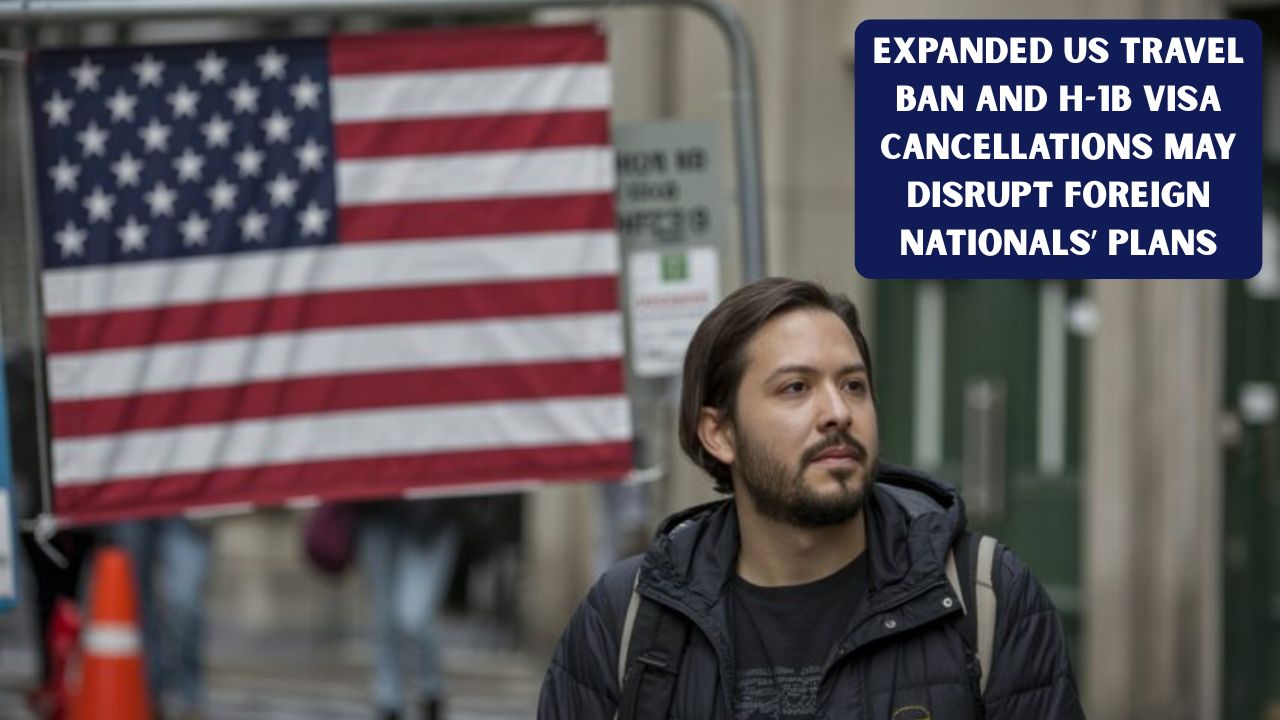
The landscape of U.S. immigration has undergone a seismic shift in late 2025, leaving thousands of foreign nationals in a state of professional and personal limbo. A combination of an expanded presidential travel ban and a wave of H-1B visa appointment cancellations has created a perfect storm of uncertainty.1 These developments are not merely administrative adjustments but represent a fundamental tightening of the borders that could redefine the lives of skilled workers, students, and their families for years to come.
The Expansion of the 2025 Travel Ban
On December 16, 2025, a significant Presidential Proclamation was issued, drastically expanding the scope of existing travel restrictions.2 Effective January 1, 2026, this “Expanded Travel and Immigration Ban” now impacts citizens from 39 countries, roughly 20% of the world’s nations.3 The policy categorizes countries into “Full Entry Bans” and “Partial Entry Bans,” targeting regions in Africa, Southeast Asia, and the Middle East.4 For many, the most immediate threat is being stranded abroad; if a citizen of a covered country is outside the U.S. without a valid visa by the New Year, they may find the doors to the United States firmly closed.5
H-1B Cancellations and Vetting Delays
Simultaneously, the H-1B program—a critical pathway for high-skilled talent—is facing unprecedented disruption.6 U.S. Consulates and Embassies, particularly in India, have begun a massive campaign of canceling and rescheduling H-1B and H-4 appointments.7 These delays are largely attributed to “enhanced vetting procedures” that include deep-dives into an applicant’s social media presence and online history.8 In some cases, appointments are being pushed back by nearly a year, forcing professionals to choose between missing vital family events or risking their employment by being unable to return to their U.S.-based roles.
| Policy Change | Impacted Group | Primary Consequence |
| Expanded Travel Ban | Citizens of 39 specific countries | Full or partial entry suspension starting Jan 2026 |
| H-1B/H-4 Cancellations | Tech professionals and dependents | Rescheduling of appointments by 6–12 months |
| Enhanced Vetting | All non-immigrant visa applicants | Mandatory social media and online presence reviews |
| New Fee Structure | New H-1B petitioners (Post-Sept 2025) | $100,000 supplemental fee for new petitions |
The End of Interview Waivers
For years, the “Dropbox” or interview waiver program allowed eligible visa holders to renew their status without an in-person appearance.9 This streamlined process was a lifeline for busy professionals. However, as of late 2025, this convenience has been virtually eliminated. Most H-1B workers and international students are now required to attend in-person interviews for every renewal.10 This policy shift has not only increased the workload for consular officers but has also created a bottleneck where even routine renewals now take months to process, significantly increasing the “risk of travel” for those already in the country.11
Financial Hurdles and High Stakes
Beyond the logistical nightmare of travel, the H-1B program has seen the introduction of a staggering $100,000 supplemental fee for new petitions filed after September 21, 2025.12 This levy is aimed at prioritizing “high-wage, high-skill” workers, but it has sent shockwaves through the tech and IT outsourcing sectors.13 While current visa holders are generally exempt from this specific fee during renewals, the overall climate of “extreme vigilance” means that any minor discrepancy—such as an old traffic ticket or an ambiguous LinkedIn post—can now lead to a summary visa revocation or a denial at the port of entry.14
Impact on the Global Tech Industry
The ripple effects of these policies are being felt across Silicon Valley and beyond. Major tech giants like Google, Apple, and Meta have issued internal memos advising their foreign national employees to avoid all non-essential international travel.15 The fear is that an employee leaving for a one-week vacation could end up stuck in their home country for six months, leading to project delays and potential job losses.16 This has sparked a trend of “localization,” where companies are increasingly looking to hire within the U.S. or move entire departments to “visa-friendly” hubs like Canada or India to maintain operational stability.17
Precautions for Foreign Nationals
For those currently holding H-1B or other non-immigrant visas, the current advice from legal experts is one of extreme caution. Staying informed through official State Department and USCIS channels is mandatory. Before any travel, individuals must confirm that their visa stamps are valid for the entire duration of their trip and that their country of citizenship has not been added to the restricted list.18 The era of “routine travel” for visa holders has, for the moment, come to an end, replaced by a period of strategic staying put and meticulous documentation.19
Conclusion and Future Outlook
As the world moves into 2026, the United States’ immigration landscape remains in a state of flux. The combination of the $100,000 fee, the expanded travel ban, and the removal of interview waivers paints a clear picture of a “security-first” approach. While these measures aim to protect domestic interests, the human and economic cost for foreign nationals is profound. Whether the legal system will intervene to moderate these changes remains to be seen, but for now, the message to the international community is clear: travel with extreme caution, or better yet, do not travel at all.

FAQs
Q1 Does the expanded travel ban apply to Green Card holders?
No, Lawful Permanent Residents (Green Card holders) are generally exempt from the travel ban restrictions and may continue to enter the U.S.20
Q2 Can I still use the Dropbox service for my H-1B renewal?
Most interview waivers (Dropbox) were suspended in late 2025.21 Nearly all H-1B and F-1 applicants must now attend an in-person interview.
Q3 What happens if my visa is revoked while I am inside the U.S.?
A visa revocation typically prevents you from re-entering the U.S. after travel. It does not automatically end your legal status while you are physically in the country, but you should consult an attorney immediately.
Disclaimer The content is intended for informational purposes only. you can check the officially sources our aim is to provide accurate information to all users.