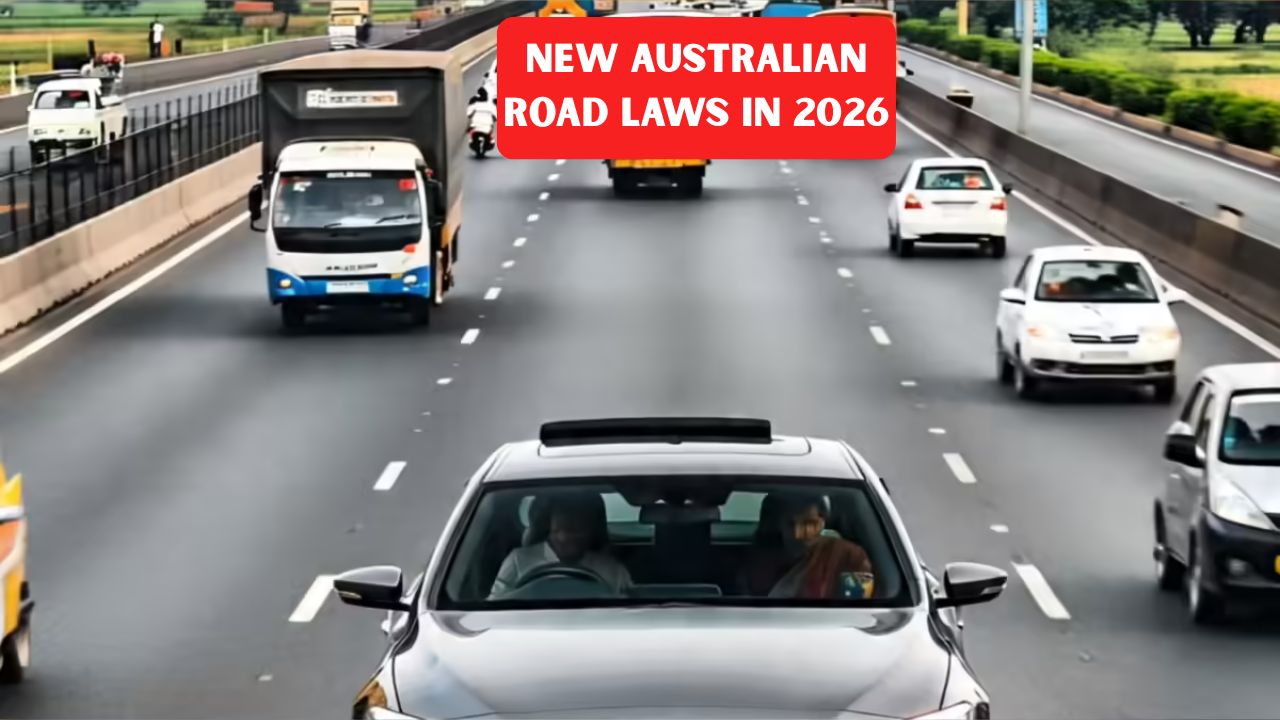
As Australia moves into 2026, the nation’s transport landscape is undergoing one of its most significant transformations in decades. Driven by a federal and state-level commitment to the “Towards Zero” road safety strategy, a suite of new laws and technological enforcements are set to reshape how we drive. These changes aren’t just minor tweaks; they represent a fundamental shift in how road safety is monitored, focusing heavily on vulnerable road users, high-tech surveillance, and a nationwide alignment of licensing standards. For everyday motorists, staying informed is no longer optional—it is essential to avoid substantial fines and ensure community safety.
The Push for 30km/h Urban Zones
One of the most debated changes for 2026 is the widespread rollout of lower speed limits in high-pedestrian and school zones. While 40km/h has long been the standard, many jurisdictions are now transitioning to a 30km/h limit in “activity centres” and dense urban pockets. Research suggests that a pedestrian’s survival rate increases significantly when vehicle speeds are reduced by even 10km/h. Queensland and New South Wales have led the charge in identifying trial zones, with 2026 marking the year these limits become permanent fixtures in many local government areas. Drivers should expect more “time-based” zones that activate during peak school or shopping hours.
AI-Powered Enforcement and Surveillance
The days of relying solely on visible police patrols are fading. By 2026, Australia will deploy a more sophisticated network of AI-powered traffic cameras. These systems are no longer just for speeding or red lights; they are now calibrated to detect seatbelt non-compliance and illegal mobile phone use with startling precision. In the Australian Capital Territory and Victoria, these cameras can peer through windscreens to identify if a driver is even resting a phone on their lap. The integration of this technology nationwide means that “passive” law-breaking—behaviours drivers might have once thought went unnoticed—will now result in automated fines and demerit point deductions.
| Offence Category | Key 2026 Change | Primary Objective |
| School & Urban Zones | Reduction to 30km/h in specific areas | Pedestrian & child safety |
| Mobile Phone Use | AI detection cameras nationwide | Elimination of distracted driving |
| Motorcycle Safety | Mandatory high-vis/gloves for novices | Reduced rider trauma |
| Older Drivers | Standardised health-based renewals | Fitness to drive assurance |
| EV Regulations | Implementation of road user charges | Infrastructure funding |
Standardising Licensing for Older Drivers
For years, the rules for senior motorists varied wildly between states like New South Wales and Western Australia. In 2026, a move toward a nationwide licensing framework for older drivers will reach full integration. This shift moves away from arbitrary age-based cancellations and toward “competency-based” assessments and more frequent medical reviews. The goal is to keep capable seniors on the road longer while providing a clear, uniform pathway for those whose health may be impacting their driving ability. This creates a fairer system for families moving between states, ensuring the same safety benchmarks apply regardless of the postcode.
New Protection for Roadside Workers
Safety for those working on our highways is also receiving a legal upgrade. Building on earlier trials, 2026 will see the “Slow Down, Move Over” laws strictly enforced across all states for a broader range of vehicles. Drivers are now required to drop their speed to 40km/h (or 25km/h in some states like SA) when passing stationary emergency, roadside assistance, and tow truck vehicles with flashing lights. Failure to do so is being met with some of the steepest penalties on the books, reflecting the high risk faced by roadside workers. This rule applies even on multi-lane highways, where motorists must move to a further lane if it is safe to do so.
Heavy Vehicle Reform and Technology
The logistics industry is not exempt from the 2026 shake-up. The Heavy Vehicle National Law (HVNL) is undergoing a massive overhaul to improve productivity while tightening safety. Key changes include the mandatory fitting of “Smart 2” tachographs for new heavy vehicles, which use GPS to track driving hours and rest periods more accurately. Additionally, a new National Audit Standard will be introduced to streamline safety checks for trucking companies. For the general public, this means more accountable freight operations and a reduction in fatigue-related accidents involving large trucks on regional arterials.
ANCAP and Vehicle Safety Standards
Finally, the cars themselves are changing. From 2026, the Australasian New Car Assessment Program (ANCAP) is introducing a “Stages of Safety” rating system. This will penalize manufacturers who rely too heavily on “distracting” touchscreens for basic functions like wipers or climate control, encouraging a return to physical buttons for safety. Furthermore, all new electric vehicles (EVs) will be assessed on their post-crash battery isolation capabilities. As more Australians transition to EVs, these regulations ensure that emergency responders can safely approach a vehicle after an incident without the risk of high-voltage hazards.

FAQs
Q1. Will I be fined for doing 40km/h in a new 30km/h zone?
Yes. Once the 30km/h signage is installed and the law takes effect in your local area, any speed over the posted limit is subject to standard speeding penalties and demerit points.
Q2. Do the new AI cameras only work during the day?
No. The new generation of AI-powered enforcement cameras utilizes infrared technology, allowing them to detect seatbelt and mobile phone offences clearly in all weather conditions and at night.
Q3. Is the 40km/h roadside assistance rule only for police cars?
No. By 2026, this rule covers all vehicles with flashing amber or blue/red lights, including tow trucks, RACV/NRMA/RACQ service vans, and highway maintenance vehicles.
Disclaimer The content is intended for informational purposes only. You can check the official sources such as the National Transport Commission (NTC) or your state’s Department of Transport; our aim is to provide accurate information to all users.