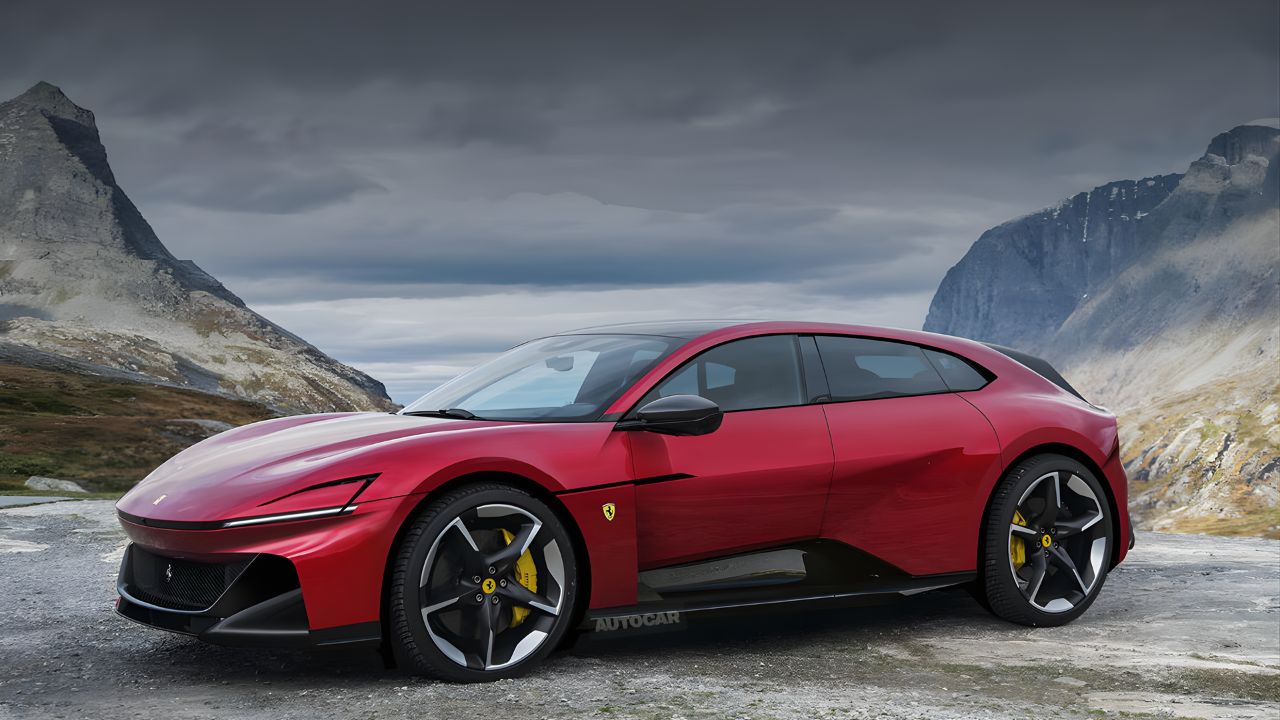
The automotive world is standing on the precipice of a historic transformation as Ferrari, the quintessential symbol of Italian speed and luxury, prepares to unveil its first-ever fully electric vehicle in 2026. For decades, the roar of a V12 engine has been the heartbeat of the Prancing Horse, but the upcoming “Elettrica” (a temporary codename) represents a bold leap into the future. Ferrari is not merely swapping an engine for a battery; it is redefining what a supercar can be in the zero-emission era. By blending cutting-edge electric architecture with the visceral driving dynamics that define the brand, Maranello aims to prove that “electric” and “emotion” are not mutually exclusive.
Engineering a Masterpiece in Maranello
Ferrari’s approach to electrification is deeply rooted in its “in-house” philosophy. Rather than outsourcing core components, the company has developed its own electric motors, high-voltage batteries, and power inverters. This ensures that every watt of energy translates into the sharp, responsive handling customers expect. The first EV will likely feature a quad-motor setup, providing independent torque vectoring at each wheel. This level of control allows the vehicle to “dance” through corners with a level of agility that masks its battery weight. By mastering the software and hardware integration, Ferrari is ensuring that its electric debut remains a true thoroughbred.
Performance Specifications and Technical Data
The 2026 Ferrari EV is expected to be a powerhouse, targeting a total output exceeding 1,000 horsepower. Early technical insights suggest a bespoke 800V architecture (capable of 880V peaks) designed for rapid charging and sustained high performance on the track. Unlike many mass-market EVs that lose power as the battery heats up, Ferrari’s cooling systems are engineered for the rigors of performance driving. Below is a breakdown of the anticipated technical milestones for this landmark model.
The Sound of Innovation: An Authentic Acoustic Identity
One of the biggest concerns for Ferrari purists is the loss of the legendary exhaust note. To address this, Ferrari has patented a unique sound signature that is not a synthetic “fake” engine noise played over speakers. Instead, engineers are using high-precision sensors to pick up the natural mechanical vibrations of the electric motors. These frequencies are then amplified and projected through the chassis and dedicated acoustic channels. The result is a soundtrack that CEO Benedetto Vigna describes as “authentic and emotional,” mimicking the rising intensity of a traditional engine as the car accelerates toward its 25,000 RPM motor limit.

The “E-Building” and Sustainable Manufacturing
To bring this vision to life, Ferrari has inaugurated its state-of-the-art “e-building” in Maranello. This 42,500-square-meter facility is a beacon of modern manufacturing, designed to produce internal combustion, hybrid, and electric vehicles on the same flexible lines. The building itself reflects Ferrari’s commitment to the environment, featuring over 3,000 solar panels and sophisticated rainwater harvesting systems. By centralizing the production of high-voltage batteries and motors within this facility, Ferrari maintains total control over quality and innovation, ensuring that the transition to electric remains a handcrafted process.
Driving Dynamics: The “Prancing Horse” Not the “Elephant”
Weight is often the enemy of performance in electric vehicles, but Ferrari is using advanced materials and active systems to combat this. The 2026 EV will utilize a structural battery pack integrated directly into the chassis, which lowers the center of gravity by 80mm compared to traditional models. Combined with the third-generation active suspension system—originally seen on the Purosangue—the car can manage its mass with incredible precision. Ferrari’s “e-Manettino” switch will also allow drivers to toggle between modes like Range, Tour, and Performance, adjusting the vehicle’s personality from a refined grand tourer to a sharp-edged track weapon.
A Multi-Powertrain Future
It is important to note that Ferrari is not abandoning its heritage. The brand’s strategy is one of “technology neutrality,” meaning that electric vehicles will complement, rather than replace, the iconic V12 and V8 engines. By 2030, Ferrari expects its lineup to be balanced between 40% hybrid, 20% electric, and 40% internal combustion models. This gives the client the freedom to choose the “thrill” that best suits their lifestyle. Whether it is the scream of a traditional engine or the silent, instantaneous thrust of an electric motor, the core DNA of the brand—performance, luxury, and exclusivity—remains unchanged.
Redefining the Luxury EV Landscape
As we move toward the official reveal in early 2026, the anticipation continues to grow. This vehicle is more than just a car; it is a statement that the most storied brand in automotive history is ready for the next century. By focusing on “emotion-driven innovation,” Ferrari is setting a new benchmark for the luxury industry. The 2026 EV will be a testament to Italian craftsmanship, proving that even in a world of batteries and wires, the soul of the Prancing Horse can still burn bright.
FAQs
Q1When will the first electric Ferrari be available?
The official global debut is scheduled for the first half of 2026, with the first customer deliveries expected to begin toward the end of that year.
Q2Will the electric Ferrari be silent?
No, Ferrari has developed a patented “sound signature” that amplifies the natural mechanical vibrations of the electric motors to create an emotional and authentic auditory experience.
Q3Is Ferrari stopping production of petrol engines?
No, Ferrari plans to continue offering a diverse lineup of internal combustion engines, hybrids, and electric vehicles, allowing customers to choose their preferred powertrain.
Disclaimer The content is intended for informational purposes only. you can check the officially sources our aim is to provide accurate information to all users