The automotive world is currently witnessing a tectonic shift as legendary marques transition from internal combustion to electric power. Among the most anticipated transformations is the Alfa Romeo Giulia EV, a vehicle that promises to marry the soul of Italian driving with the relentless efficiency of a battery-electric powertrain. As the successor to one of the most celebrated sports sedans of the modern era, the Giulia EV is not just a replacement; it is a manifesto. Alfa Romeo aims to prove that the “Meccanica delle Emozioni” (Mechanics of Emotions) can thrive without the roar of a V6, focusing instead on instant torque, a low center of gravity, and a design that remains unmistakably Alfa.
STLA Large Platform: The Backbone of Performance
At the heart of the new Giulia EV lies the STLA Large platform, a BEV-native architecture developed by Stellantis. This platform is engineered specifically for D and E-segment vehicles, providing the structural rigidity and flexibility required for a high-performance sports sedan. Unlike previous platforms that were adapted for EVs, the STLA Large is built around the battery pack, allowing for a near-perfect weight distribution. This ensures that the Giulia retains its legendary handling characteristics. By utilizing advanced high-strength materials and an 800V electrical architecture, the platform supports ultra-rapid charging and extreme power outputs that could potentially redefine the segment.
Power and the 1,000 HP Quadrifoglio
Performance has always been the North Star for the Giulia, and the electric era is set to amplify this. The lineup is expected to begin with a base version producing roughly 345 horsepower, followed by a mid-range Veloce trim delivering nearly 800 horsepower. However, the crown jewel will be the Quadrifoglio EV. Early reports and executive confirmations suggest a tri-motor setup capable of producing a staggering 1,000 horsepower. This flagship model will likely feature sophisticated torque vectoring, allowing it to corner with even more precision than its predecessor, while achieving a 0-100 km/h sprint in the 2-second range—placing it firmly in the territory of hypercars.
Technical Specifications at a Glance
To understand the leap in technology, it is helpful to look at the projected capabilities of the upcoming model compared to the benchmarks set by the STLA Large architecture.
| Feature | Estimated Specification |
| Platform | Stellantis STLA Large (800V Architecture) |
| Base Power Output | ~345 Horsepower |
| Veloce Power Output | ~790 Horsepower |
| Quadrifoglio Power Output | ~1,000 Horsepower |
| Maximum Range (WLTP) | Up to 800 km (approx. 500 miles) |
| Battery Capacity | 85 kWh to 118 kWh |
| Charging Speed | 10% to 80% in ~18 minutes |
| Drivetrain Options | Rear-Wheel Drive (RWD) / All-Wheel Drive (AWD) |
Range and Charging: Eliminating Anxiety
One of the primary goals for the Giulia EV is to provide a “substitute” experience rather than a compromise. With battery options ranging up to 118 kWh, the sedan is targeting a maximum range of 800 kilometers (approx. 500 miles) on the WLTP cycle. This significant range is made possible by the platform’s aerodynamic efficiency and advanced energy management systems. Furthermore, the 800V system enables ultra-fast charging; users can expect to replenish the majority of their battery in under 20 minutes at compatible high-power stations. This makes the Giulia EV a viable option for long-distance grand touring, staying true to its Italian heritage.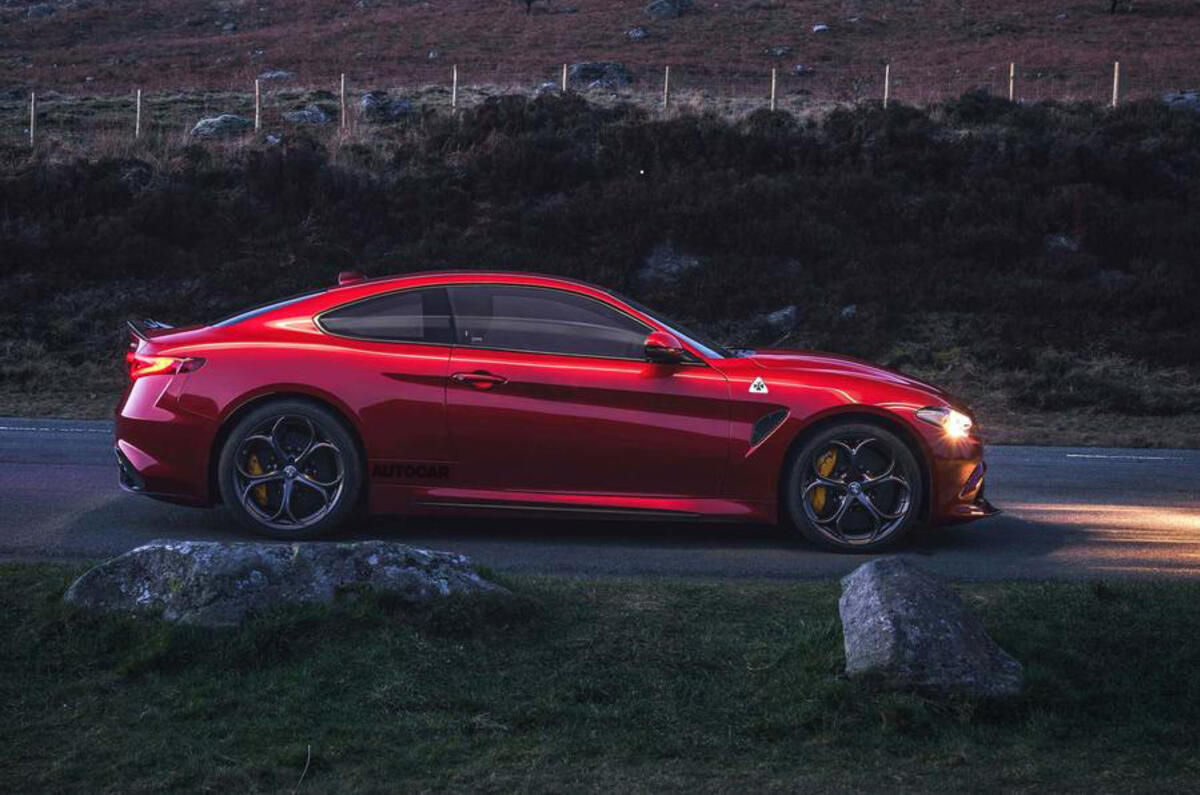
Evolved Design: Aerodynamics Meets Emotion
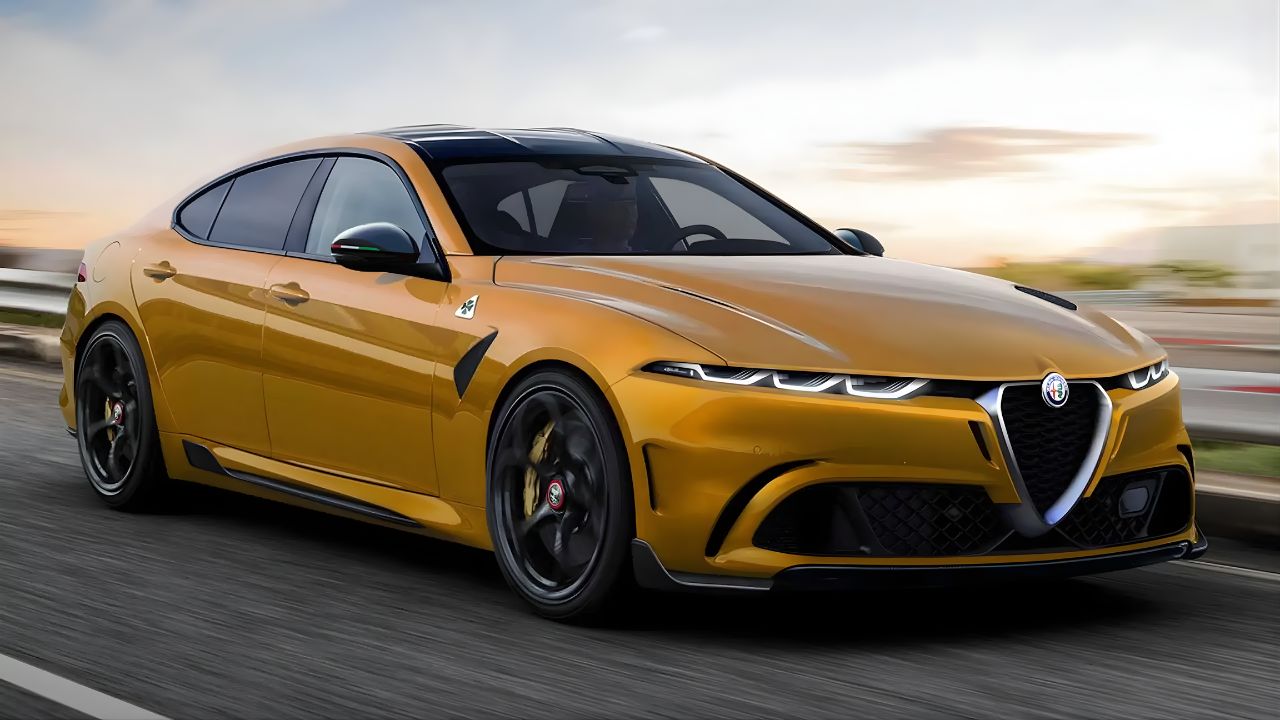
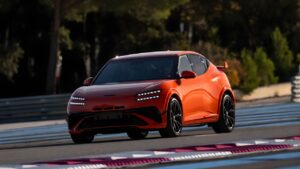
Visually, the Giulia EV Concept is expected to undergo a “re-evolution.” While it will retain the signature Trilobo grille and sharp, aggressive lines, the move to an EV allows for a more aerodynamic silhouette. We may see a shift toward a “fastback” or “crossover-sedan” profile to optimize airflow and increase interior volume. The lack of a front-mounted engine allows designers to shorten the overhangs and extend the wheelbase, creating a more planted stance. The interior will likely feature the STLA SmartCockpit, a digital-first environment that emphasizes the driver’s connection to the road through haptic feedback and minimalist, premium materials.
Technology and the STLA Brain
Beyond raw speed, the Giulia EV will be a showcase for the STLA Brain software architecture. This system supports over-the-air (OTA) updates, ensuring the vehicle’s performance and infotainment features stay current throughout its lifecycle. It also paves the way for advanced Level 2+ or even Level 3 autonomous driving capabilities. However, Alfa Romeo has emphasized that technology will always serve the driver. Features like the “Cannocchiale” digital cluster will likely offer classic analog-style gauges to satisfy traditionalists, while the software manages the complex torque distribution required to make the car feel light and agile on its feet.
FAQs
Q1. When will the Alfa Romeo Giulia EV be released?
The electric Giulia is expected to be officially unveiled in 2025, with production and global sales likely commencing in early 2026.
Q2. Will there still be a gasoline version of the Giulia?
While the primary focus is on the EV, the STLA Large platform is “multi-energy” capable. Depending on market demand, hybrid or internal combustion variants may be offered in specific regions.
Q3. How fast can the Giulia EV charge?
Thanks to its 800-volt architecture, the Giulia EV can charge from 10% to 80% in approximately 18 minutes using a high-performance fast charger.
Disclaimer
The content is intended for informational purposes only. you can check the officially sources our aim is to provide accurate information to all users